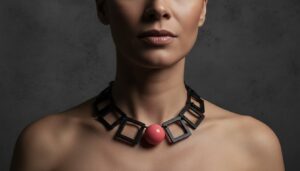
The most intimate gallery you’ll ever visit isn’t found behind velvet ropes; it’s the one you wear against your skin. You’ve likely felt the disconnect of mass-market fashion, where the 2023 State of Fashion report confirms billions of items are produced annually, leaving you with accessories that feel hollow and anonymous. This is why handcrafted jewelry has become a sanctuary for those who value ethical transparency and want their style to reflect a truly unique, non-conformist identity. We believe your adornments should be as complex and authentic as you are.
This guide explores the profound artistry and meticulous techniques that define these pieces as more than just decorative objects. You’ll discover how soulful stories and artisan labor transform raw materials into sculptural pieces of “Art You Can Wear.” We’ll show you how to identify genuine quality in handmade work and connect with a brand philosophy that celebrates individuality. You’ll see why the rhythmic fusion of metal and stone is the ultimate tool for self-expression, offering a modern elegance that respects both the creator and the wearer.
Key Takeaways
- Learn to transition from simple ornamentation to “wearable art”—a soulful intersection of traditional craftsmanship and your unique personal narrative.
- Discover the beauty of material fusion and how the deliberate pairing of semi-precious stones with acrylic beads creates a bold, sculptural aesthetic.
- Master the criteria for discerning quality in handcrafted jewelry, focusing on the weight, balance, and meticulous finish that define artisan excellence.
- Reframe “imperfections” as natural characteristics of character, distinguishing the organic soul of artisan pieces from the sterile uniformity of mass production.
- Understand the power of radical authenticity and how a philosophy of untouched imagery empowers you to celebrate your bold, individual identity.
The Soul of Handcrafted Jewelry: More Than Just an Accessory
Handcrafted jewelry exists at the intersection of ancient tradition and a bold, contemporary vision. It represents a deliberate departure from the cold precision of mass production, favoring instead the warmth of a creator’s touch. Every piece serves as a physical dialogue between the artist and the wearer, transforming raw materials into a narrative that lives on the skin. In our increasingly digital existence, these tactile objects offer a grounding reality that a factory-made item simply cannot replicate. Jewelry making as a form of human expression dates back roughly 75,000 years to the Blombos Cave in South Africa, proving that our need to adorn ourselves with meaningful objects is foundational to the human experience.
The role of the artist is that of a storyteller. Through the manipulation of metal, the selection of a specific stone, or the rhythmic placement of a bead, the creator embeds a piece of their own journey into the work. This process elevates the object from a simple decorative item to a form of storytelling that honors the history of the materials used. When you choose handcrafted jewelry, you aren’t just buying an accessory; you’re acquiring a fragment of an artistic legacy that celebrates the organic over the manufactured.
Defining Handcrafted in a Modern Context
There’s a vital distinction to be made between items that are merely handmade and those that are truly handcrafted. While “handmade” often refers to components assembled by hand, “handcrafted” implies an artist-led process from the initial sketch to the final polish. To understand the depth of this craft, one might ask What is handcrafted jewelry? and how it differs from commercial manufacturing. It is the meticulous attention to every sculptural curve and the intentionality behind every texture that defines this category. The artist’s touch is visible in every detail, ensuring no two pieces are ever identical.
This approach allows for the creation of wearable art, a concept that challenges the rigid boundaries of traditional fashion. It encourages a focus on the natural characteristics of materials. We celebrate the unique inclusions in a stone or the slight asymmetry in a hand-forged silver band. These aren’t flaws; they’re markers of authenticity that prove a human hand guided the work. This rejection of sterile perfection allows for a more honest and sophisticated aesthetic.
The Emotional Resonance of Artisan Design
The choice to wear artisan-made pieces is an act of self-empowerment. It’s a celebration of individuality in a world that often prizes uniformity. An intimate connection forms between the creator and the wearer, bridged by the shared appreciation for the time and soul poured into the metal. This relationship moves beyond the monetary value of gold or gems, focusing instead on the spiritual value of the art itself. It’s about how a piece makes you feel when it catches the light or rests against your collarbone.
Jewelry becomes a tool for expression, reflecting the wearer’s unique identity and internal strength. By prioritizing handcrafted jewelry, individuals support an ethical ecosystem that values creativity over speed.
- Authenticity is found in the lack of digital retouching and the presence of real-world textures.
- Artistic fusion combines diverse materials like acrylic and semi-precious stones to create something entirely new.
- Each piece acts as a silent declaration of one’s personal aesthetic and values.
This isn’t just about looking good. It’s about feeling a sense of clarity and confidence that comes from wearing something with a genuine heartbeat. The result is a piece that feels bold but beautifully wearable, a constant reminder of your own unique story.
The Alchemists Palette: Materials and Techniques in Artisan Design
The artist’s palette is a deliberate collection of textures and tones that goes beyond simple aesthetics. It’s a selection process rooted in narrative weight. True handcrafted jewelry begins with the soul of the material, where the artist considers how a cool piece of jasper or a warm fragment of wood will feel against the skin. This isn’t about traditional luxury; it’s about the emotional resonance of the elements themselves. Every material is chosen to tell a story of origin and intention.
Mixing high and low materials is a core philosophy of this creative process. You’ll find acrylic beads sitting proudly alongside semi-precious stones. This fusion challenges the conventional hierarchy of the jewelry world. By combining these diverse elements, the artist creates a beautiful tension that feels both modern and timeless. It’s a bold rejection of mass production that celebrates the unique character of every component. You can find these expressive combinations in our latest wearable art collection.
From Semi-Precious Stones to Organic Fusion
Stones like Lapis Lazuli and Labradorite are prized for their natural, untouched characteristics. The deep celestial blues and shifting metallic flashes aren’t hidden behind excessive polishing or digital retouching. Instead, their raw imperfections are framed as badges of authenticity. These stones provide a grounded, earthy foundation for complex designs.
Contrast is the primary tool used to create visual energy. Many handcrafted necklaces utilize the juxtaposition of heavy, opaque stones with translucent glass or light bone. This creates a tactile allure that invites touch. For those seeking a connection to the earth, the wood necklace stands as a symbol of natural elegance. It offers a warmth and lightness that minerals simply cannot replicate, making it a staple of sculptural design.
The Meticulous Journey of Assembly
Every piece starts as a vision in a sketchbook before moving to the workbench. The journey from a raw material to a finished, sculptural statement piece is long and intentional. Time is the most valuable material in any handcrafted jewelry piece. A single necklace might require 15 to 20 hours of focused labor to ensure every hand-linked connection is secure and fluid. This process cannot be rushed by machines.
- The Initial Sketch: Mapping out the balance of weight and color.
- Material Preparation: Sorting through hundreds of stones to find the perfect match.
- Hand-Linking: Creating up to 30 individual connections by hand for maximum durability.
- The Final Polish: A gentle refinement that preserves the natural character of the materials.
Working with non-uniform materials presents significant technical challenges. No two pieces of bone or wood are identical in density or shape. The artist must adapt their technique to the specific quirks of each element. This level of attention ensures that the final piece isn’t just an accessory; it’s a durable work of art that celebrates individuality through its own unique flaws.
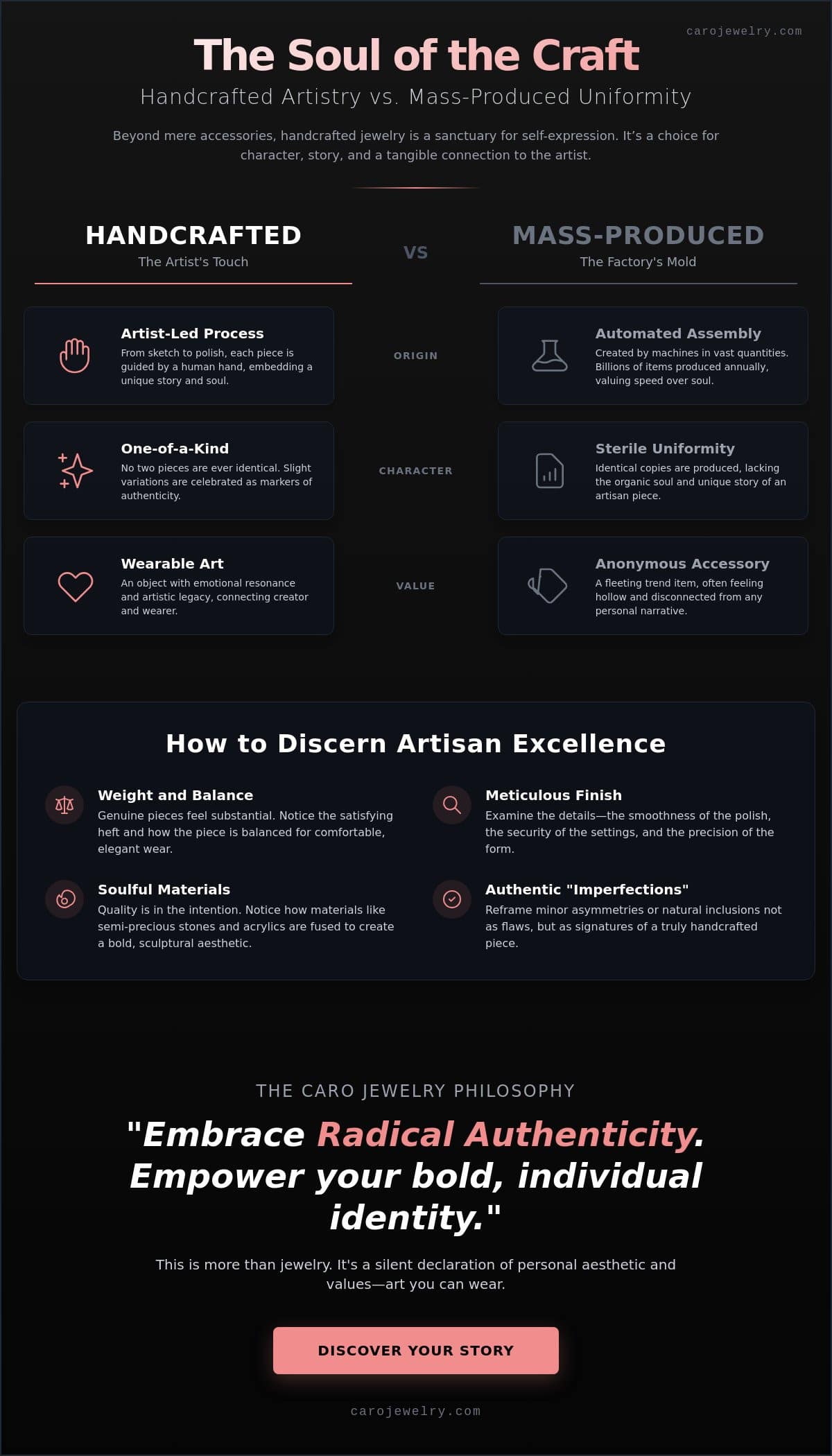
Handcrafted vs. Mass-Produced: Choosing Character Over Uniformity
Mass-produced jewelry relies on the cold precision of industrial machinery to churn out thousands of identical units every hour. This process prioritizes uniformity above all else, resulting in pieces that often feel hollow or spiritually disconnected from the wearer. When you choose handcrafted jewelry, you’re investing in a piece that possesses a structural soul. It’s the difference between a printed photocopy and an original oil painting. One is a commodity; the other is a narrative captured in metal and stone. The artisan’s touch leaves a trace of life that a factory mold simply cannot replicate.
The Myth of Perfection
Commercial jewelry marketing often relies on heavy digital retouching to present an impossible standard of “perfection.” They erase the natural grain of the metal and hide the unique inclusions within gemstones. This creates a sterile aesthetic that lacks life. We believe these “flaws” are actually natural characteristics that prove a piece’s authenticity. No two handcrafted pieces are ever truly identical, and that’s their greatest strength. Embracing an untouched aesthetic is a badge of honor for the discerning collector. It shows you value the honest reality of the materials over a manufactured facade. These subtle variations in texture and form ensure your piece is truly Art You Can Wear.
Ethical Sourcing and the Transparent Supply Chain
Choosing small-batch, artist-owned brands isn’t just about style. It’s a conscious decision to support a more ethical world. A 2022 survey by the Responsible Jewellery Council found that 68% of modern consumers prioritize transparency in the supply chain. When you buy from independent designer jewelry brands, you know exactly who made your piece and where the materials originated. Small-scale production naturally reduces the carbon footprint of fashion because it avoids the massive waste associated with global factory logistics. It celebrates individuality while fostering a social value that mass-market retailers often ignore. Supporting an artist means your investment stays within the creative community, fueling a cycle of passion rather than corporate profit. This transparency creates a deeper connection between the object and the owner, turning a simple purchase into a meaningful partnership.
Discerning Quality: How to Evaluate Handcrafted Statement Pieces
Discerning quality in handcrafted jewelry requires a shift in perspective. You aren’t looking for the sterile, repetitive perfection of a machine; you’re looking for the soul of the maker. A well-crafted statement piece feels substantial. It possesses a deliberate weight that signals the use of genuine materials, such as 925 sterling silver or high-density acrylic beads. The finish should feel smooth against the skin, free from snagging edges that suggest a lack of care. When you hold a piece, its balance should be immediate. It shouldn’t feel lopsided or flimsy, but rather like a cohesive sculpture designed for the body.
Structural Integrity vs. Artistic Fluidity
The beauty of an artisanal piece lies in its hidden strength. When you examine a necklace, check the security of the clasps and the tension in hand-knotted cords. A professional artisan uses 100% silk or high-strength nylon to ensure the piece doesn’t stretch over time. A well-balanced statement necklace sits perfectly on the collarbone, distributing its weight so it doesn’t shift more than a few millimeters during regular movement. It’s vital to distinguish between a “raw” design, which intentionally preserves the organic texture of the material, and “unfinished” workmanship, where edges are left sharp or joins are visible and weak.
Identifying Authentic Craftsmanship
Authenticity lives in the details that machines can’t replicate. Look for subtle tool marks or the unique, non-repeating patterns found in natural stones. These aren’t defects; they’re the fingerprints of the creator that celebrate the organic nature of the materials. Choosing fine jewelry as wearable art represents a commitment to style that transcends seasonal trends. Limited edition collections, often restricted to fewer than 50 pieces, further ensure this exclusivity. This rarity provides a sense of personal connection that mass-produced items lack. Each piece becomes a permanent chapter in your personal narrative.
Wearability is the bridge between art and fashion. A bold piece is only successful if it’s comfortable enough for an eight-hour day or a long evening event. This is why the fusion of materials matters. Lightweight acrylic can provide the visual volume of a statement piece without the physical burden of heavy metals. To preserve these treasures for decades, store them in a cool, dry place and clean them with a soft, lint-free cloth after each use. This simple 30-second routine prevents the buildup of oils and preserves the luster of the materials for future generations.
Explore our latest collection of Art You Can Wear and find a piece that speaks to your soul.
Wearable Art for the Modern Individual: The Caro Jewelry Philosophy
At Caro Jewelry, we believe that accessories should be more than just decorative additions to an outfit; they are extensions of the self. Our mission centers on celebrating individuality through bold, sculptural design that challenges the status quo of mass-produced fashion. Every piece of handcrafted jewelry we create represents a deliberate fusion of natural materials, like semi-precious stones, and contemporary flair, such as vibrant acrylic beads. This contrast reflects the modern individual: grounded in nature but living in a fast-paced, artistic world. We don’t just make ornaments. We create “Art You Can Wear.”
Celebrating Individuality Through Bold Design
Trends are fleeting, but true art remains eternal. We design for the person who chooses to move away from seasonal fads toward timeless, artistic self-expression. Wearing a one-of-a-kind statement piece feels empowering. It provides a sense of quiet confidence that mass-market items simply cannot replicate. Our collectors frequently share that their Caro pieces act as natural conversation starters in social settings. These items don’t just sit on the skin; they interact with the world, signaling a wearer who values meticulous craftsmanship and a unique personal narrative. Each sculptural curve and bold color choice is intended to build confidence, turning the act of getting dressed into a daily ritual of empowerment.
The Caro Promise: Authenticity Without Photoshop
The jewelry industry often hides behind digital filters and heavy retouching to present an impossible standard of perfection. We take a different path. Since our brand’s inception, we’ve maintained a 0% retouching policy across our entire digital catalog. Our photography remains entirely untouched to ensure radical authenticity for every collector. We want you to see the real texture and character of every stone before it ever reaches your hands.
If a bead has a natural inclusion or a unique surface pattern, we celebrate it. We don’t view these as flaws; we see them as the “natural characteristics” that give a piece its soul. We believe you deserve to see the true essence of the handcrafted jewelry you buy. This transparency builds a bridge of trust between the artist’s studio and your jewelry box. Our commitment to honesty means that the piece you see online is the piece that will resonate with you in person.
Starting your journey as a collector of wearable art is an intimate, rewarding process. It begins by looking for the piece that resonates with your current chapter of life. We invite you to explore our current collection to find your unique artistic match. To begin your collection, consider these steps:
- Identify your texture: Do you prefer the cool weight of stone or the light, modern feel of acrylic?
- Seek the story: Look for pieces that mirror your personal journey or aesthetic values.
- Embrace the bold: Choose one piece that pushes you slightly outside your comfort zone.
Define Your Style Through Wearable Art
Choosing handcrafted jewelry is a deliberate departure from the repetitive nature of factory-made accessories; it’s an investment in character and soul. You’ve seen how the fusion of raw materials and artistic vision creates something far more valuable than its components. By prioritizing sculptural design over mass-produced uniformity, you embrace a philosophy that celebrates every natural trait as a mark of authenticity. It’s about finding pieces that resonate with your personal narrative and your eye for detail.
Every Caro Jewelry piece is meticulously designed and assembled in the USA. This dedication to craft has earned our collections a place in “Wearable Art” exhibitions, where the line between gallery piece and personal adornment disappears. We believe in radical transparency. That’s why we never use Photoshop or digital retouching on our imagery; what you see is the honest, unedited beauty of the materials. You deserve to see the real texture of the stones and the genuine glow of the metal.
Explore the Collection: Art You Can Wear
Let your choice of adornment be a fearless reflection of the artist within you.
Frequently Asked Questions
What is the difference between handmade and handcrafted jewelry?
Handcrafted jewelry relies on the artist’s manual skill to manipulate materials with specialized tools, while the term handmade suggests the piece was formed entirely by hand without any mechanical aid. Most artisans use 3 or 4 specific tools like pliers and torches to ensure every curve feels intentional. This process celebrates the sculptural soul of the metal, ensuring your piece isn’t just a product but a reflection of a creative journey.
Why is handcrafted jewelry more expensive than mass-produced items?
These pieces represent a higher investment because a single design often takes 15 to 25 hours of focused bench time to complete. Mass production relies on high-speed casting machines that produce 100 units per hour, stripping away the artistic nuance. By choosing handcrafted jewelry, you’re supporting ethical labor practices and the meticulous selection of high-quality materials like acrylic beads fused with semi-precious stones.
How can I tell if a piece of jewelry is truly handcrafted?
You can spot authentic work by looking for tiny, beautiful imperfections like faint hammer marks or slight variations in stone setting that machines can’t replicate. These natural characteristics are badges of honor that prove a human eye guided the process. I never use digital retouching in my photography, so the piece you see online matches the raw, organic texture you’ll feel against your skin.
Is handcrafted jewelry durable enough for everyday wear?
Every piece is built for daily life using durable techniques like cold-connections and heavy-gauge wire that won’t snap under pressure. While mass-market items often use thin plating that wears off in 3 months, these sculptural designs utilize solid metals meant to last for years. It’s art you can wear through every meeting, dinner, or quiet moment without fear of losing its structural integrity.
How do I care for handcrafted jewelry made with mixed materials?
To maintain pieces that mix acrylic and metal, simply wipe them with a clean microfiber cloth after each use to remove skin oils. Avoid soaking these items in liquid jewelry cleaners, as chemicals can cloud acrylic surfaces or damage the internal structure of porous stones. Store your jewelry in a soft pouch to prevent scratches, keeping the fusion of materials as vibrant as the day you first wore it.
What are the environmental benefits of buying handcrafted jewelry?
Choosing handcrafted jewelry significantly lowers your carbon footprint because small-batch production uses about 40 percent less energy than large-scale industrial factories. Most independent artists source their materials from local suppliers, which cuts down on the long-distance shipping emissions associated with global retail chains. It’s a conscious choice that respects the planet while honoring the meticulous craft of the human hand.
Can I request a custom handcrafted jewelry piece?
I welcome custom requests to help you express your unique identity through a collaborative design process. This journey usually starts with a 20-minute conversation where we discuss your vision and select the specific stones or metals that resonate with your spirit. It takes approximately 4 to 6 weeks to transform a shared idea into a finished piece of wearable art that is entirely your own.